
Bringing Closure to a Year in an Uncertain World
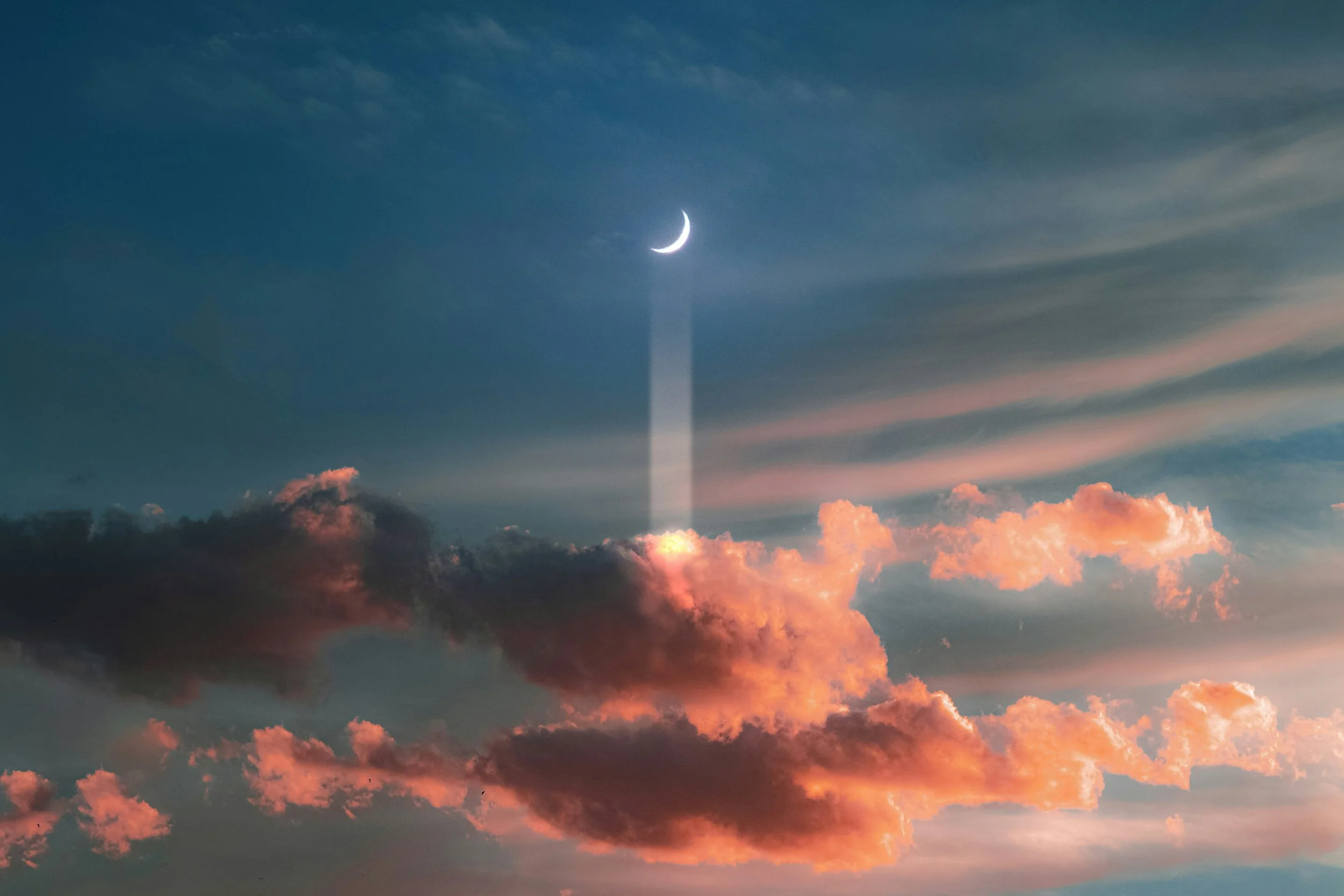
We’ve arrived at the first crescent of the moon of Elul, a threshold month—a time to look back at the past year, and do the soul work of examining where we’ve been, and where we are going.
This month, the month of Elul, the Hassidic Master, the Alter Rebbe taught, the Divine Power is not royal or hierarchical, but right here and now, showing up as a loving, gracious friend who meets us in the field. We can imagine interacting with God as our intimate, not as the ruler or King…which is the ruling archetype and face of Gd, during the High Holidays.
This month as we place ourselves in the Presence of higher consciousness, imagine God as a beloved friend or lover whom you haven’t seen for a long time. Imagine this friend being gentle and receptive to you, and above all, compassionate, because they recognize what you have gone through this past year.
This friend will help you do the requisite work of Elul, called: Cheshbon haNephesh ~חשבון הנפש~ Taking an inventory of life in the past year. This is the time to reflect, muse, and polish our souls, making amends and improvements wherever we can.
For the past 30 years, I’ve guided New Moon of Elul retreats that I have guided annually. This year, I handed the baton to younger spiritual leaders in my home community. (They did a fantastic job!) Over all those years, I compiled lists of sacred practices with a suggestion to take just one and sincerely do it for the month. I’m delighted to share these ten practices with you here in hopes they can support your earnest reflection this season:
Spiritual Practices for the Month of Elul
Compiled by Rabbi Tirzah Firestone
1. Shuv laMakom: Come back to your place, says the Book of Formation, to your G-d-center. Each day in Elul, take time to attend to your deep Self. How? Stop to give thanks, to listen, journal, ask for assistance.
2. Time-Honored Elul Traditions: Blow or hear the Shofar every day during this month as a means of waking up your divine connection. (You can hear Shofar online.) It is also traditional to readPsalm 27. Find one verse that opens your heart and make it your mantra, or select another sacred text that speaks to you. Learn it by heart. You hear me explain how to blow the shofar here (and how one pup responded!)
3. A Daily act of Tzedakah: This month, open your channels to the world around you with random acts of kindness, charity, and justice in any form. Extend yourself!
4. Re-Connect. Make time to visit, write, or call people whom you love and care about. Let them know what they mean to you. Check in and ask: Are we in the clear? Be willing to hear the truth (and likewise, to tell it, lovingly.)
5. Make Amends: Reach out to those with whom you feel unresolved. Be willing to take full responsibility for past distress, focusing on your part of any unrest. Be open to hearing another perspective.If not possible or appropriate to resolve issues directly with someone with whom there is pain, consider a ritual: Light a candle and invoke the person's Self. Ask for clarity and light to prevail in this matter.
6. Fulfill Old Promises. Pay back loans and outstanding bills wherever possible; return borrowed books and clothes. Let go of old stuff, and with it, old patterns.
7. Honor Yourself. Ask: What self-care have I been putting off? Make arrangements to get a physical, dental, or other exam if you have not done so. Honor yourself!
8. Practice Shmirat haLashon, mindful speech. Avoid unnecessary talk and especially negative speech or gossip. Be aware of your words and how they land in other people.
9. Get a Teshuvah Buddy. Consider meeting with a trusted friend once a week in Elul to share your process of self-repair. Share with them your sincere efforts to break free of old patterns that keep you stuck. Ask: "From your clearest, most loving place, can you help me see things in myself that I cannot see?"
10.Start & Finish: Start each day of Elul with gratitude. End each day with forgiveness.Before sleep, review the day. Forgive yourself. Forgive others. Start and finish your day affirming your connection to That Which Is Greater (TWIG).
And, here is one more practice of journaling reflection that you can engage now:
The practice is to look back at your 2025-2026 calendar, journal, or photos to review your life since last September when the Jewish year began. Inspired by the words of Kim Krans, we turn inward: “We admit who we are fully and bravely, and thus open ourselves to the process of transformation.” In this time of inventory, ask yourself:

What are three highlights (or lowlights) that have shaped the landscape of your year?
For example, births, deaths, travel, health issues, new jobs, turning points.
How have I cared for myself physically this past year?
Here you might include your bodily health, food and sleep, home, car, and money: your physical plant. What went right, what went poorly? What is in your power to correct?
How have I cared for my heart this past year?
This category includes family, friendships, pets, art, poetry and nature. What has made your heart sing? What relationships have most nourished you, or were left untended? Are there amends to yourself or others you wish to make?
How have I cared for my spiritual and intellectual growth this year?
This includes ongoing growth from multiple sources such as books, podcasts, classes, therapy, meditation, teachers, etc. What have been your most inspiring sources of growth and soul-nourishment this year? Where might you have distracted yourself, gotten lazy, or stuck? What might you wish to improve?
How have I cared for the world this year?
This is, of course, a vast question. Each of us has a unique role to play, a special means of bringing healing. What is yours? Whatever it is, do you feel you acted to the fullness of your capacity this past year when it came to the erosion of values, democracy, truth, and fairness in the society around us? How did you relate to the suffering of others, close and far? What might you wish to improve in the year ahead?
This season, let’s greet and sustain new things! Let’s collect the harsh elements of our era—the raw pain, darkening clouds, and heavy metals—into a shared alchemical cauldron and transform them together into a new vision, a new chapter.
Images in this post are from Mahdi Soheili and Sixteen Miles Out.